The System Failed Dusty.
Now it must answer for it.
Accountability Supported With Facts
Dusty Turner was wrongfully convicted of murder and abduction, crimes he did not commit, and served more than 30 years in prison, even though the truth was already on the record.
In 2008, during a Writ of Innocence hearing, the court determined that the actual perpetrator, Billy Brown, had provided credible recanted testimony. Brown admitted that he had testified falsely at Turner’s original trial regarding a material fact in the case. The court further found that this recantation was previously unknown and unavailable to Turner both at the time of his original conviction and when that conviction became final.
In his written opinion, Judge Lowe, presiding over the three-judge panel, stated: “The court finally finds that Mr. Brown is credible in his assertion that he acted independently in murdering the victim and that Mr. Turner had no role in the murder or in the restraining of the victim.”
Based on these findings, a 2–1 panel of the Virginia Court of Appeals granted Turner a Writ of Innocence, explicitly holding that he was “actually innocent” and ordering his release. This ruling was particularly significant because it marked the first time in Virginia history that a conviction was overturned through a Writ of Innocence hearing based on non-biological evidence.
The Numbers Tell A Damning Story
These are not abstractions. They represent more than three decades of a man’s life, taken by a system that convicted first and asked questions later
02
WRONGFUL CONVICTIONS
Dusty was convicted of both murder and abduction — two separate crimes the evidence shows he did not commit.
82
YEAR SENTENCE
He was sentenced to 82 years without parole. The actual perpetrator, who confessed, received a lesser sentence of 72 years.
30+
YEARS SERVED
Dusty served over 30 years, the entirety of his adult life, for two crimes confessed to by another man.
0
ROLE IN THE CRIME
A circuit court judge specifically found Dusty had "no role in the murder or in the restraining of the victim." Zero involvement.
A system that got it wrong.Twice.
In 1996, Dusty was wrongfully convicted of both the murder and abduction of Jennifer Evans — crimes committed entirely by his SEAL swim buddy, Billy Brown, who later confessed to acting alone. The convictions rested largely, in the judge's own words, on circumstantial evidence.
After Brown's confession, Dusty filed a Writ of Actual Innocence. At an evidentiary hearing, the circuit court judge found Brown's confession credible and explicitly ruled that Dusty had no role in the murder or the restraining of the victim.
And yet, through a legal and novel theory involving a single word, that a reasonable juror “COULD” believe that Dusty intended to deceive the victim into leaving the bar for nefarious purposes, the appeals courts declined to overturn either conviction. Not because Dusty was guilty. But because the system found a way to leave its mistakes intact. That is the injustice Dusty is now fighting to correct.
The Polygraph & How Dusty Was Framed
Selected Evidence
Dusty’s Wrongful Conviction
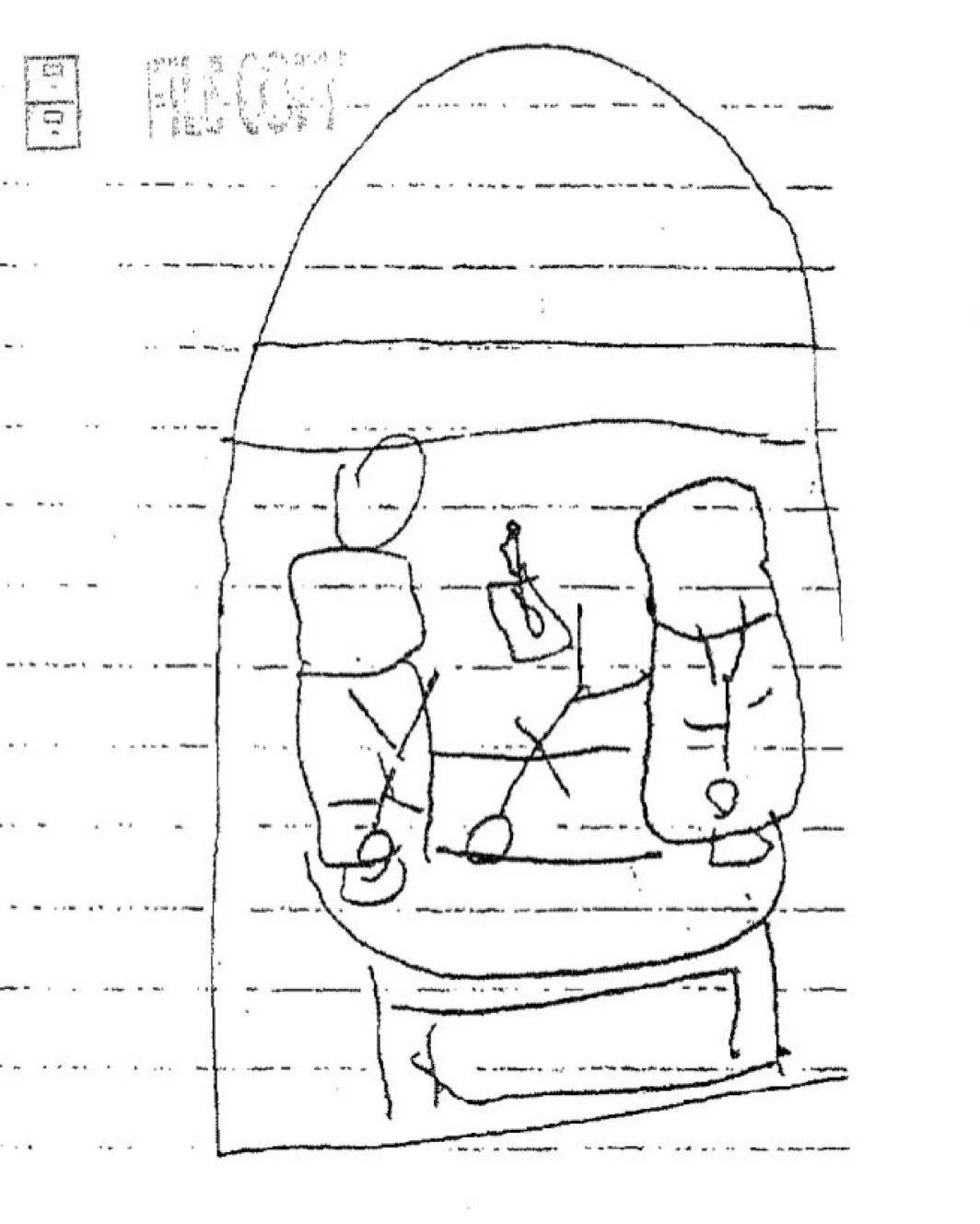
The False Car Drawing
“Selling The Jury" the Prosecution's Theory of Abduction at Trial
No Signs of Struggle in the Car & No Technical Analysis of the Car
Billy Brown’s Recantation in 2008 at the Evidentiary Hearing for Dusty’s Petition for a Writ of Actual Innocence
-
A parole grant acknowledges nothing. Dusty is working with legal advocates to pursue every available avenue toward formal exoneration — removing both wrongful convictions from his record and restoring his name.
-
The facts are on record: a confessor, a judge's ruling of no involvement, two wrongful convictions. Dusty is committed to ensuring this record is widely understood and cannot be buried.
-
Through media appearances, his writing, and public speaking, Dusty is using his platform to speak plainly about what happened to him — and what must change so it does not happen to others.
-
Dusty's case is unique and that allows him to have a unique perspective. He intends to build coalitions with reform organizations, legal advocates, and policymakers to drive real, lasting change in how wrongful conviction cases are handled.
Dusty’s Justice Mission